
Diwali Is Here, and the Hills Celebrate It Twice: Igas Bagwal 2026
Cover: the Doon Valley lit up below the hills near Mussoorie. Shot by us.
Diwali is here. The whole country is glowing tonight, and from our ridge in Suwakholi the valley below looks like someone spilled a jar of fireflies. But in the Garhwal hills, Diwali season isn’t about to end. There’s Govardhan Puja, the festival of a hill that sheltered a whole village. And eleven days after Diwali, the hills light their lamps all over again for Igas Bagwal, Garhwal’s own Diwali.
This guide covers both. The story of Govardhan, animated the way it deserves (a storm, a hill and one very strong little finger), and everything about Igas Bagwal 2026: the date, the fire-spinning bhailo, and why the mountains celebrate eleven days later than everyone else.
When is Igas Bagwal 2026?
Igas Bagwal 2026 falls on Friday, 20 November. Also called Budhi Diwali, it’s celebrated on Kartik Shukla Ekadashi, eleven days after Diwali, mainly in the Garhwal hills of Uttarakhand, where it’s a public holiday. Govardhan Puja 2026 falls on Tuesday, 10 November in most calendars.
The Diwali season, day by day
Diwali is the start of the party up here, not the end. Here’s how November 2026 lines up:
Dates follow most panchangs and Uttarakhand’s 2026 holiday list. Village almanacs can differ by a day, so check locally.
The day a mountain became an umbrella
Govardhan Puja comes right after Diwali, on Kartik Shukla Pratipada. This year it falls on Tuesday, 10 November in most calendars. It’s also called Annakut, and its story is one of the best-loved in the Krishna tradition. Press play and watch it happen:
1Vraj, long agoEvery autumn, the cowherd families of Vraj made offerings to Indra, the god of rain.
2Indra gets angryKrishna asked them to thank Govardhan Hill instead. Indra answered with a storm.
3One little fingerSo Krishna lifted the whole of Govardhan Hill and held it up like an umbrella.
4Seven days, seven nightsEvery family and every cow in Vraj sheltered under the hill until the storm gave up.
5A mountain of foodThe sky cleared, Indra bowed out, and the people cooked the hill a feast: Annakut.
The story of Govardhan Puja
Every autumn, the cowherd families of Vraj made offerings to Indra, the king of the gods and the lord of rain. Young Krishna asked them a simple question. Why thank a god up in the sky, when it was Govardhan Hill that gave their cows grass, water and shade? So that year, the village honoured the hill instead.
Indra took it badly. He sent a storm over Vraj, with rain that would not stop. The families ran to Krishna, and Krishna lifted the whole of Govardhan Hill on the little finger of his left hand and held it up like a giant umbrella. Every family and every cow in Vraj sheltered under it for seven days and seven nights.
When Indra saw that no one had been harmed, he gave up. The clouds broke, Indra came to Krishna to make peace, and the people of Vraj celebrated by offering the hill a mountain of food.
Why it feels close to home up here
Live in the hills for a while and the idea makes complete sense. The ridges around Suwakholi keep the wind off our roofs, fill the springs and grow the grass the cattle graze on. Govardhan Puja is a thank-you note to a hill. Up here, we get it.
Annakut: a mountain of food for a mountain
Annakut literally means “a mountain of food”. Homes and temples cook a feast, traditionally around 56 dishes (the chappan bhog), and arrange them in tiers with a heap of rice or grain in the middle standing in for the hill. Sweets go closest to the deity.
Many homes also build a small Govardhan out of cow dung, dot it with tiny cows and twigs for trees, and walk around it in prayer. In Braj, devotees walk the full parikrama of the real Govardhan Hill, a circuit of about eleven miles.
Igas Bagwal: Diwali again, the Garhwal way
Eleven days after Diwali, on Kartik Shukla Ekadashi, Garhwal celebrates Diwali all over again. It’s called Igas Bagwal, Igas, or Budhi Diwali (“old” or “late” Diwali), and for families across the hills it is every bit as much their Diwali as the one the rest of India just celebrated.
Homes are cleaned and lit with diyas, the kitchen runs all day, families visit each other with plates of food, and the dhol and damau keep going late into the night. Then comes the part you won’t see anywhere else.
Igas nightbhailo: fire spun against the dark
What is bhailo?
A bhailo is a torch made from a bundle of dried pine wood and grass, tied to a rope. You light one end, hold the other, and swing it in wide circles over your head. Village grounds turn into rings of fire while people sing bhailo songs about light chasing away the dark. It looks wild, and it is.
Cows and bullocks are washed, rubbed with mustard oil, marked with turmeric, garlanded and fed a bhog of flattened rice, milk and ghee.
Arsa, swala, urad dal pakode and jhangore ki kheer, a barnyard-millet pudding. Plates go door to door between neighbours.
Folk dances like Jhumailo and Chanchari go on late into the night, with the whole village in the circle.
Diyas line the steps, windows and courtyards, exactly like Diwali night, eleven days later.
Why eleven days late? Two stories
The news came late
When Lord Ram returned to Ayodhya, the news took eleven days to cross the mountains to the hills of Garhwal. So the hills lit their lamps the day it arrived, and kept that date ever since.
The warrior came home
Garhwal’s commander Madho Singh Bhandari was away on a campaign in Tibet and missed Diwali. When he came home victorious eleven days later, his villages held their Diwali then.
Both stories end in the same place. Diwali is about someone coming home, and the hills waited for theirs.
Diwali and Igas, side by side
- When
- Kartik Amavasya · Sun 8 Nov 2026
- The light
- Diyas, candles and fireworks
- Big ritual
- Lakshmi Puja
- On the plate
- Mithai boxes and festive sweets
- The story
- Ram returns to Ayodhya
- When
- Kartik Shukla Ekadashi · Fri 20 Nov 2026
- The light
- Diyas, plus bhailo fire spun overhead
- Big ritual
- Cattle worship and bhailo
- On the plate
- Arsa, swala, pakode, jhangore ki kheer
- The story
- The news reached the hills eleven days late
Spend the Igas long weekend in the hills
Igas falls on a Friday this year and it’s a holiday in Uttarakhand, so Friday 20 to Sunday 22 November makes a natural long weekend. A few things worth knowing before you come up:
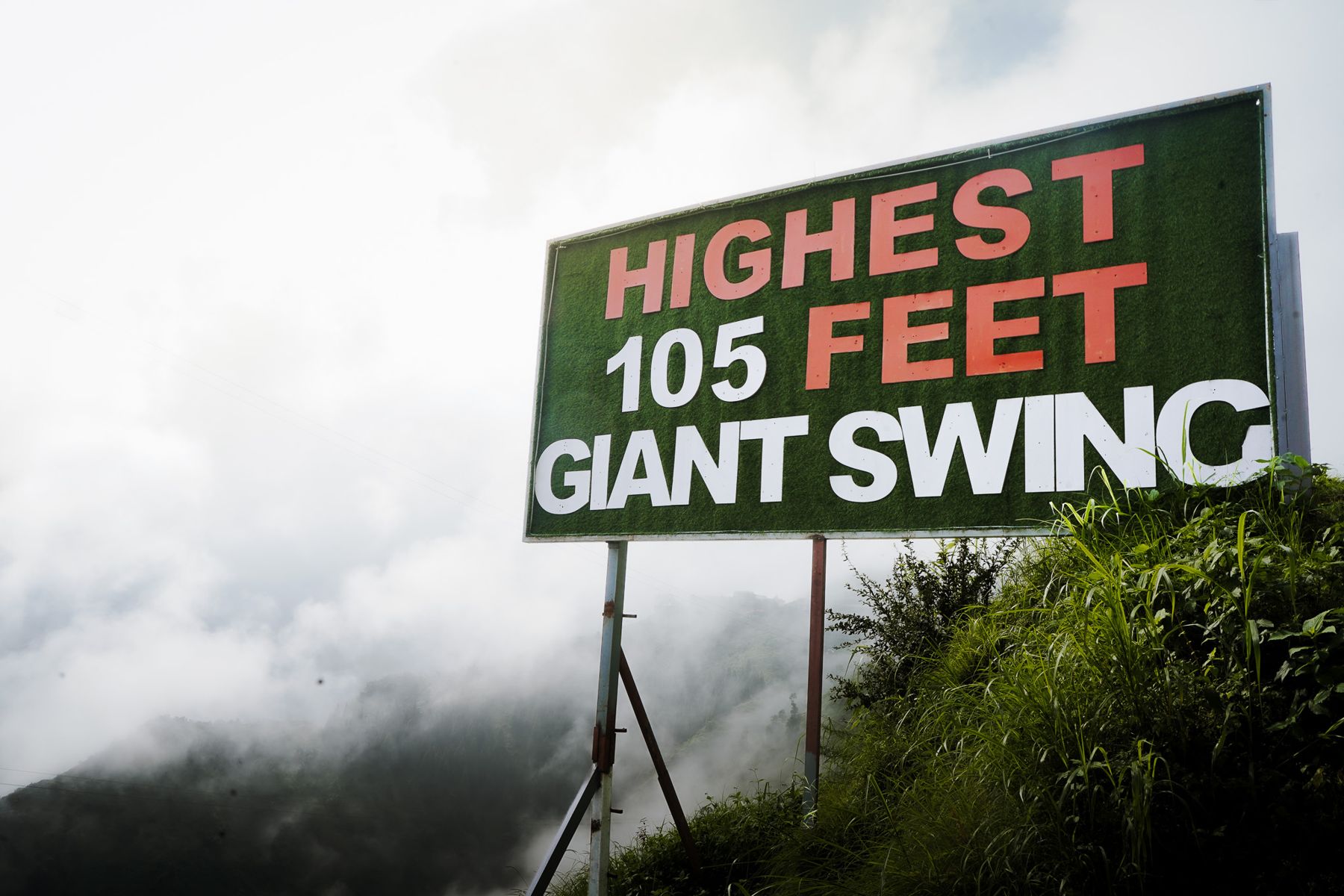
High Fly Adventure is right here in Suwakholi, with a 600 m zipline across the valley, the 105 ft Giant Swing and more than 25 activities. Spend the day in the air and the evening by the fire.
Stay for the Igas weekend
Highlanders Café & Stay has cottages on the Suwakholi ridge, far from the city smoke, with a café that looks out over the valley.
Explore the staysIgas Bagwal & Govardhan Puja: FAQs
When is Igas Bagwal 2026?
Igas Bagwal 2026 falls on Friday, 20 November 2026. It is celebrated on Kartik Shukla Ekadashi, eleven days after Diwali. Some local almanacs can differ by a day.
What is Igas Bagwal?
Igas Bagwal, also called Igas or Budhi Diwali, is the Diwali of the Garhwal hills in Uttarakhand. Families light diyas, worship and feed their cattle, cook traditional food, dance to the dhol and damau, and spin burning bhailo torches after dark.
Why is Igas Bagwal celebrated eleven days after Diwali?
One legend says the news of Lord Ram returning to Ayodhya reached the Garhwal hills eleven days late. Another says the villages waited for the commander Madho Singh Bhandari, who came home victorious from a campaign in Tibet eleven days after Diwali.
What is bhailo?
A bhailo is a torch made from a bundle of dried pine wood and grass tied to a rope. One end is lit and the torch is swung in wide circles overhead, with songs and dancing, on the night of Igas Bagwal.
Is Igas Bagwal a holiday in Uttarakhand?
Yes. Igas Bagwal is on Uttarakhand’s 2026 holiday list, on Friday, 20 November, which makes 20 to 22 November a long weekend.
When is Govardhan Puja 2026?
Govardhan Puja 2026 falls on Tuesday, 10 November in most calendars, on Kartik Shukla Pratipada, right after Diwali.
What is the story of Govardhan Puja?
The people of Vraj used to make offerings to Indra, the god of rain. Krishna asked them to honour Govardhan Hill instead. An angry Indra sent a storm, and Krishna lifted Govardhan Hill on his little finger, sheltering every family and cow for seven days until Indra gave up.
What is Annakut?
Annakut means “a mountain of food”. On Govardhan Puja, homes and temples prepare a feast of traditionally around 56 dishes, arranged in tiers with a heap of rice or grain standing in for the hill.
Where can I experience Igas Bagwal near Mussoorie?
Igas is celebrated in villages across the Garhwal hills, including the villages around Suwakholi on the Mussoorie–Dhanaulti road. It is a family and village festival, so go as a respectful guest, ask before taking photos and stay nearby for the evening.
See you at Igas
Diwali is here, and the hills have one more coming. Come up for the long weekend, and we’ll point you to the best views by day and the warmest fires by night.
More from the hills: Mussoorie in November · Winterline in Mussoorie · What to pack for November · All stories